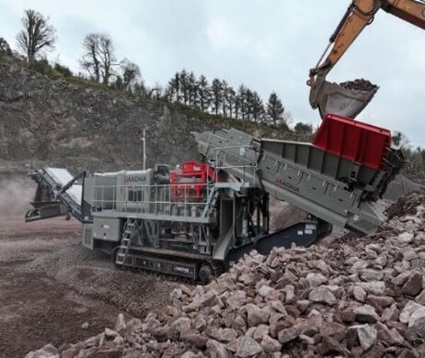
After being launched at Hillhead 2024, the spotlight returned to MAGNA, Terex Materials Processing’s (Terex MP) relatively young but ambitious brand targeting large-scale crushing and screening operations, at the same international quarrying, construction and recycling exhibition (23-25 June 2026).
Just two years after its official unveiling, MAGNA is already gaining traction in global markets, positioning itself firmly in the high-capacity segment of aggregates production and surface mining.
For Neil McIlwaine, MAGNA business line director, the journey so far has been about laying solid foundations, both in product development and global distribution, while responding to a rapidly evolving customer landscape that increasingly demands efficiency, scalability, and sustainability.
Building a foundation for scale
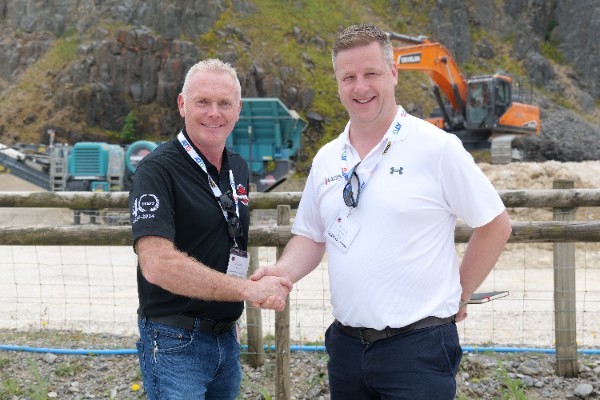
-(2).jpg?sfvrsn=96f0b1a9_2 "Neil McIlwaine, Business Line Director, MAGNA (1) (2)")
Neil McIlwaine, Business Line Director, MAGNA | “Over the last two years, the key focus has been to establish a strong product portfolio for larger production environments,” McIlwaine explains. MAGNA’s target audience is clear: large aggregates producers and mining customers requiring high-throughput, heavy-duty solutions.
That focus has translated into a growing range of crushers, screens and conveyors designed specifically for large-scale operations. Today, the MAGNA portfolio includes around 17 models—spanning jaw crushers, cone crushers, impact crushers, a wide array of screens, and conveyors—with multiple variants available across diesel-hydraulic and hybrid configurations. Crucially, around 80% of the product range can be supplied in dual-power hybrid form, reflecting rising demand for more flexible and energy-efficient solutions. The push toward full electrification is also firmly on the agenda, with selected models earmarked for fully electric ‘plug-and-play’ configurations on the product roadmap. |
“It’s very much market-driven,” says McIlwaine. “Customer feedback, distribution input, and regional to industry requirements are shaping how quickly and where we transition to full electric.”
Distribution: A critical early win
Alongside product development, MAGNA has prioritised building a capable global distribution network, one tailored specifically to the needs of high-capacity operations.
Two years in, MAGNA has appointed 12 distributors worldwide, with half of those located in North America. The US market has been a particular focus, with six distributors covering key regions from Florida and Georgia across to Texas, the Midwest, and the West Coast up to Washington State.
This has been complemented by strong representation in Australia—where Mineral Processing Solutions (MPS) provides nationwide coverage—as well as key appointments in the UK (Blue Group), West Africa, Southern Africa, and Japan.
“The key thing was identifying distributors with the right expertise for larger equipment,” said Felim Óg Gildernew, Business Development Manager, MAGNA. “It’s not just about selling machines—it’s about understanding the application, supporting the customer, and delivering long-term performance.”
This strategy has helped MAGNA quickly establish a foothold in major markets, particularly in Australia and North America, where demand for high-capacity solutions is strong.
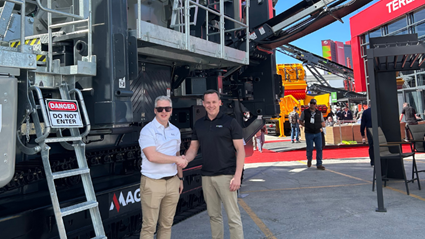
Powerscreen Crushing and Screening was the first appointment to its global distribution network in North America
A growing product identity
While MAGNA initially leveraged larger products from the Powerscreen and Finlay portfolios to accelerate market entry, the brand is now increasingly defined by its own models.
Among these are the MT130J jaw crusher and the MT400C cone crusher—two machines developed especially for MAGNA and designed for high throughput and demanding applications.
The MT400C, which took centre stage on the Hillhead 2026 stand, exemplifies the brand’s approach. Equipped with an MVP 450X cone chamber, it can deliver production rates of up to 700 tonnes per hour, depending on the application.
“It’s an extremely flexible unit,” says Niall Duffy, Product & Technical Sales Manager, MAGNA. “It can operate in secondary, tertiary or quaternary crushing, accept an all-in
feed, and ultimately replace multiple smaller units in a fleet.”
That ability to consolidate equipment is a key selling point, particularly for customers facing labour shortages and rising operating costs.
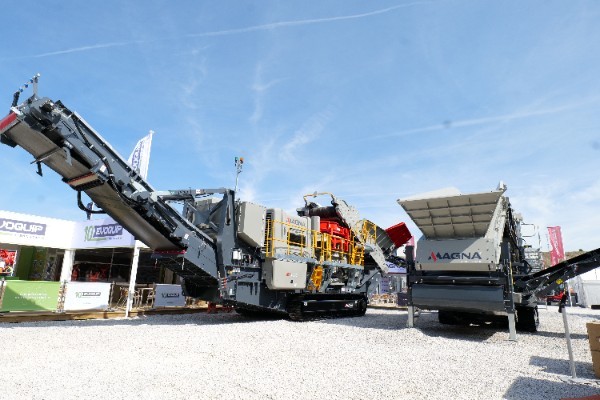
MAGNA MT400C large cone crusher and MT6S heavy duty scalping screen at Hillhead 2026
The consolidation trend
Across the industry, operators are increasingly looking to do more with less—fewer machines, fewer operators, and shorter operating weeks, without sacrificing output.
“We’re seeing customers move from five or six plant trains down to three, while maintaining the same production rates,” McIlwaine notes “At the same time, they want to reduce operating days—from six days to five, or even four days a week.”
MAGNA’s larger, more efficient machines are designed to enable exactly that shift. By delivering higher throughput per unit, they reduce the need for multiple machines, operators, and maintenance resources.
“The biggest challenge in the market today is people—resource, knowledge, and availability,” he adds. “So customers are looking at consolidation and efficiency gains wherever they can.”
Case study: Doubling output in Kentucky
A compelling example of MAGNA’s approach can be found at Park City Stone in Kentucky, USA—one of the brand’s earliest full-system installations.
Previously operating a six-machine tracked mobile train producing around 350 tonnes per hour, the customer needed to double output to meet a new long-term contract. MAGNA delivered a four-machine solution comprising a M130J jaw crusher, M400C cone crusher, and two horizontal screens, integrated with an existing tertiary cone.
The result? Production increased to between 850 and 900 tonnes per hour—more than double the previous output—while reducing the overall equipment count.
Fuel efficiency improvements were equally significant. The new hybrid-powered primary crusher consumes around 30 litres per hour when operating on its standalone genset, compared with 40 litres per hour for the previous unit, despite delivering more than twice the throughput.
The installation, commissioned in April 2025, has since attracted global attention, driving further enquiries from customers across the Americas.
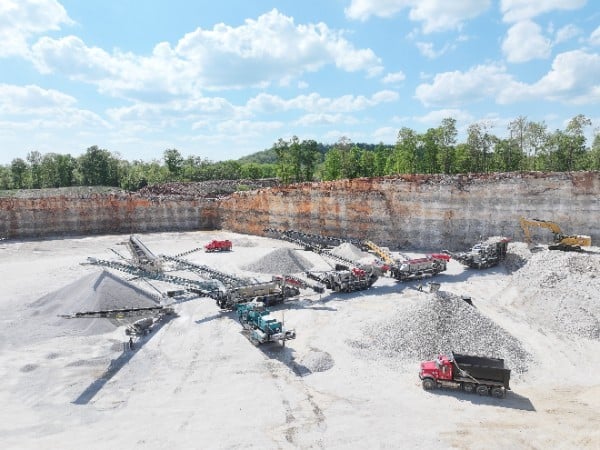
MAGNA train at Park City Stone, Kentucky
Europe: Opportunity amid fragmentation
While MAGNA has made rapid progress in North America and Australia, Europe represents a more complex but promising landscape.
“There are definite hotspots,” says Gildernew. “Scandinavia is a key focus, as well as parts of Eastern Europe and Central Asia, where infrastructure development and mining activity are driving demand.”
The UK market also presents opportunities, particularly as larger aggregate producers increasingly consider higher-capacity solutions and target efficiencies.
Currently, MAGNA’s business mix sits at around 60% mining and 40% aggregates—a split influenced by strong uptake in the Australian mining sector. Over time, Gildernew expects this to move towards a more balanced 50/50 distribution.
Sustainability through scale
Sustainability is another key driver underpinning MAGNA’s growth strategy—but not in the conventional sense of simply switching to electric power.
While electrification and hybrid systems are central to the roadmap, McIlwaine emphasises that the most immediate environmental gains come from efficiency and consolidation.
“If you can replace multiple machines with one larger, more efficient unit, you’re immediately reducing fuel consumption and emissions,” he explains.
In some cases, MAGNA equipment can achieve double the throughput of smaller machines while using significantly less fuel overall—resulting in lower emissions per tonne produced.
This is increasingly important as contracts begin to specify not just total emissions, but emissions intensity.
“Customers are now being asked to demonstrate emissions per tonne,” McIlwaine notes. “That’s only going to increase, and we’re working closely with customers to quantify those benefits.”
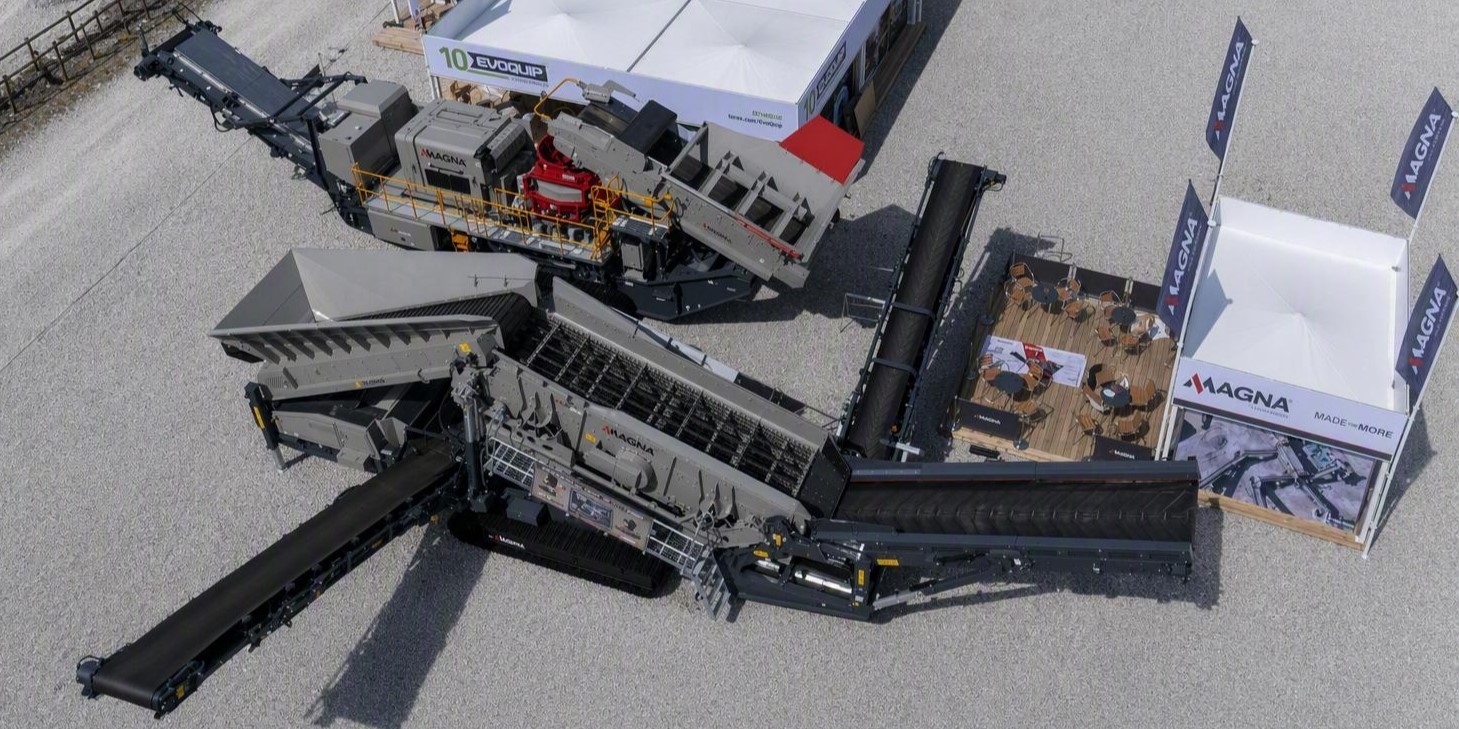
A bird’s eye view of the MAGNA stand at Hillhead 2026
Digitalisation: The next frontier
As production scales up, so too does the need for smarter, more connected operations.
MAGNA machines are already equipped with T-Link telematics as standard, offering data monitoring and reporting capabilities. But the brand is now exploring more advanced digital solutions, including real-time system integration and AI-driven optimisation.
“Our goal is to move towards a more connected plant environment,” says McIlwaine. “Multiple machines working in sync, controlled from a single interface.”
Future developments may include systems capable of linking not just MAGNA machines, but mixed fleets from multiple suppliers—addressing a common pain point in the industry.
While timelines remain fluid, the direction of travel is clear: greater automation, reduced operator input, and improved overall plant efficiency.
Looking ahead, MAGNA’s product roadmap continues to evolve.
The brand’s largest tracked mobile screening plant is currently in final design and expected to be prototyped in 2027 ahead of a 2028 launch. A second phase will introduce a high-capacity inclined screen, targeted for around 2029.
Additional developments include electrified versions of existing crushers, new jaw models, and potential expansion into additional crusher technology systems.
“Our aim is to offer a complete solution,” Duffy says. “Crushing, screening, conveying—everything required for high-capacity operations across various industries including In-Pit crushing and conveying systems (IPCC).”
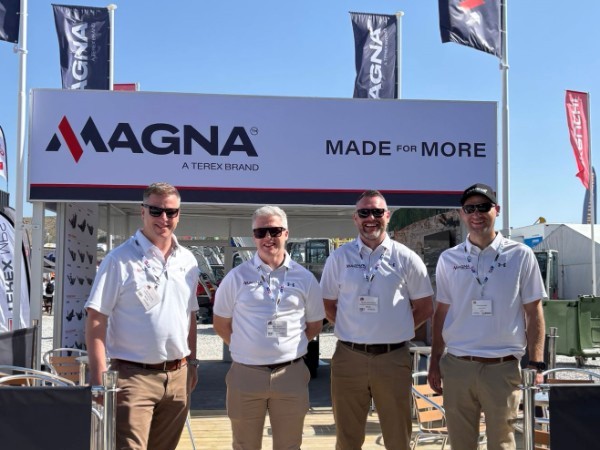
Neil McIlwaine, Niall Duffy, Felim Og Gildernew, Johnston McFarland, MAGNA
Manufacturing and scalability
MAGNA leverages Terex MP’s global manufacturing footprint, with crushers produced at the historic Pegson facility in Coalville, Leicestershire, England, and screens manufactured in Northern Ireland. Conveyor solutions are sourced from facilities in India and Malaysia, while selected products are built in the US for local markets.
Importantly, McIlwaine confirms that existing sites have sufficient capacity to support MAGNA’s growth, with ongoing investment and expansion plans in place across the network.
Defining success
So what will success look like for MAGNA?
For McIlwaine, it comes down to three core pillars: a fully developed product range purpose-built for large-scale crushing and screening applications, a strong and targeted global distribution network, and a dedicated team with deep expertise in high-capacity applications across various industries.
“We want a full MAGNA identity,” he says. “A complete product portfolio, supported by the right people and the right partners.”
With further expansion planned across South America, Asia, and Canada—and continued investment in product development and digital technologies—the foundations appear firmly in place.
As the aggregates and mining sectors continue to scale up and adapt to new challenges, MAGNA’s early progress suggests it is well-positioned to play a significant role in the next phase of high-production-plant evolution.

_whiteaec2baebe8bf4b6ca8c69611c23f0ba9.png?sfvrsn=d07df12e_1)

10.tmb-1920x.jpg?sfvrsn=e788ed71_1)
.tmb-425x.jpg?sfvrsn=119e379b_2)