.png?sfvrsn=15cc5ec7_0)


Legacy waste is often seen as a long-standing challenge—accumulating over time, occupying valuable space, and increasing disposal costs. But with the right processing approach, it can be transformed into a valuable resource.
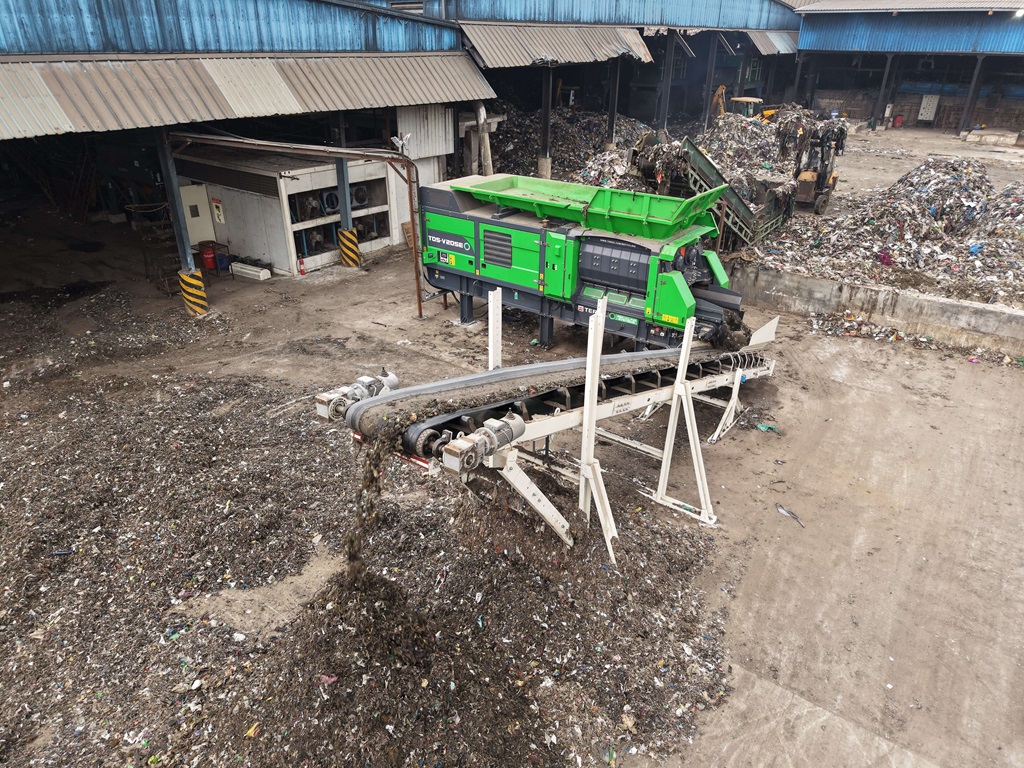
At a customer site in South India, the TDS V20 SE secondary shredder is converting legacy waste into a consistent, usable fuel for the cement industry.
The Challenge: Managing Legacy Waste at Scale
The site was dealing with accumulated legacy waste that had remained unprocessed for years. This led to:
- Continued reliance on landfill
- Rising handling and transportation costs
- No value recovery from existing waste streams
The need was clear: process the waste efficiently and convert it into a usable output.
The Solution: Reliable RDF & SRF Production
The TDS V20 SE was deployed to process legacy waste into:
- Refuse-Derived Fuel (RDF)
- Solid Recovered Fuel (SRF)
These fuels are widely used in cement kilns as an alternative to conventional fossil fuels.
With its robust design and consistent output sizing, the machine ensures material meets the required specifications for downstream use.
From Waste to Fuel: The Process
Input: Legacy Waste
Processing: Secondary shredding using TDS-V20SE
Output: Sized material for RDF/SRF applications
Flow:
Legacy Waste → Shredding → Sized Output → Cement Kiln Use
Measured Impact
- Processing Capacity: Up to 15 TPH
- Output Size: ≤60 mm
- Application: Suitable for RDF/SRF use in cement kilns
- Operational Outcome: Reduced landfill dependency and improved resource recovery
Turning a Liability into a Resource
By implementing this solution, the site is now able to:
- Reduce landfill reliance
- Convert legacy waste into a productive fuel stream
- Support alternative fuel use in cement production
- Improve overall waste processing efficiency
What was once an unutilized waste stockpile is now contributing to ongoing industrial energy needs.
Why It Matters
With increasing pressure on landfill capacity and a growing focus on sustainability, waste-to-energy solutions are becoming essential.
Producing RDF and SRF from legacy waste supports a more circular approach—where waste is repurposed as a resource for industry.
See the TDS V20 SE in Action: