



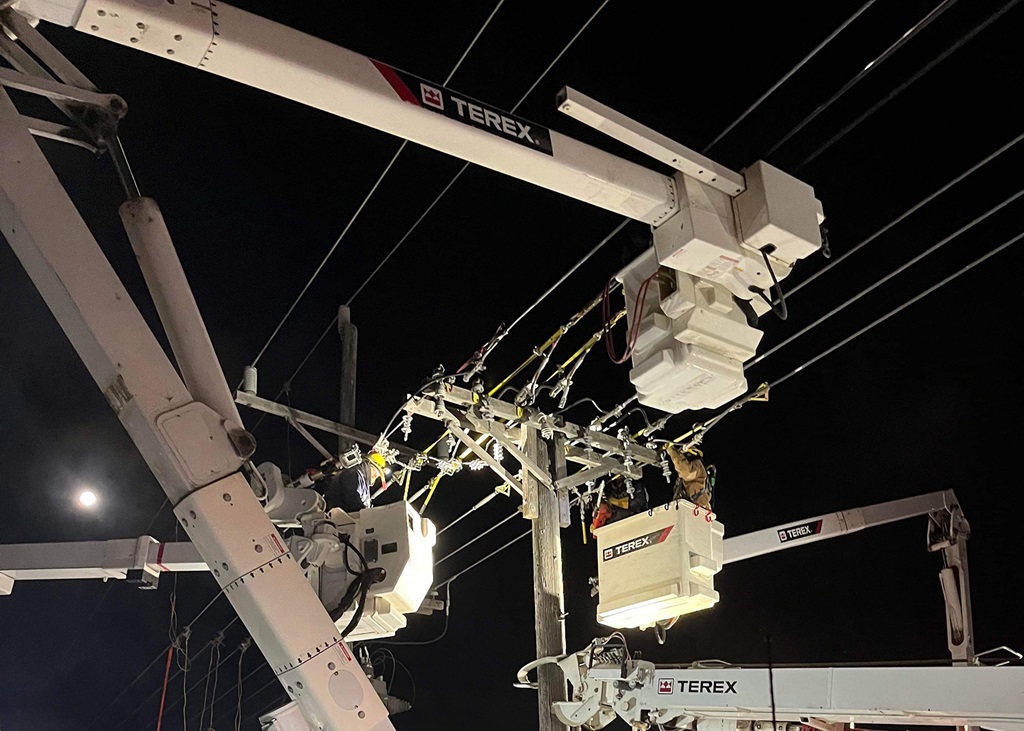
Reliable power is an essential part of everyone’s life. When a storm hits and the power goes out, communities can be thrown into full crisis mode. It’s up to utility companies, cooperatives and contractors to restore service as quickly as possible.
Whether it’s rain, wind, snow, ice or a combination of all the elements, utility companies need to have a storm response plan in place so they can dispatch crews quickly and restore services. An extensive response plan includes ensuring equipment is ready to go at a moment’s notice, having the proper supplies on hand in the event of a storm, and making sure crews are prepared for working safely in the elements.
Have your fleet ready to go
No matter how much people attempt to predict the weather, Mother Nature has her own ideas. Utility companies need to ensure their equipment fleet is ready to respond to outages, 24 hours a day, 7 days a week, 52 weeks a year. The best preparation starts with preventative maintenance.
Utility trucks, digger derricks and cable pullers should be a part of a routine maintenance program. An efficient maintenance program will reduce the amount of time it takes for a utility company to deploy its fleet to the field in an emergency and will also help reduce the work for service technicians and mechanics during peak operating intervals. And because storm work usually occurs in bad weather conditions, a routine program will help reduce the need for field repairs.
A preventative maintenance program should be built on the recommended manufacturer service schedule for every individual piece of equipment and then customized for an organization’s normal working schedule. By the nature of utility work versus over-the-road duty, almost all equipment falls under the severe maintenance schedule for routine maintenance. Utilities should review which equipment in their fleet is going to be due for maintenance soon when a major storm is predicted in the area.
Don’t forget the tires
Inspecting and replacing tires is usually part of a routine maintenance program. However, spending some time to check tire conditions before dispatching a truck after a storm is crucial. Depending on the time of year, crews are facing icy and snow-packed roads, or debris after high winds, tornados and hurricanes. The time of year will dictate the proper steps to ensure truck tires are safe for travel. Having plenty of tread is important for rain, sleet, snow and ice, and if the conditions are bad enough tires should be fitted with snow chains. If chains are needed, make sure your crew knows how to put them on to prevent damage to the vehicle.
In the event of a storm that has left a lot of debris, many utilities will have a tire service shop chemically treat their fleet’s tires so trucks can continue to run even with a puncture.
Several large utility companies order trucks designed to use flotation tires so they can operate more effectively in wet and muddy conditions. Having that extra flotation makes a big difference when a crew is trying to gain access to utility lines that are difficult to get to.
Be Prepared
Every utility company, cooperative and contractor should make sure they have a detailed storm readiness plan. At the start of every season, they should take inventory of supplies and ensure the equipment is ready for that season’s weather patterns be it derechos, tornados, hurricanes or winter storm conditions.
Utility work can be a thankless job much of the time, but in the event of a major storm, lives depend on the talented men and women working to restore power and communications.
.tmb-425x.jpg?sfvrsn=ba8a777d_1)
.tmb-425x.jpg?sfvrsn=3acc0d38_1)