



.tmb-1024x.jpg?sfvrsn=617f60e4_1)
Terex Utilities sells aerial devices that fit into three different categories: overcenter, non-overcenter, and telescopic. Understanding the basic aspects of each will help you determine which will work best for your job site.
Overcenter Aerial Device:
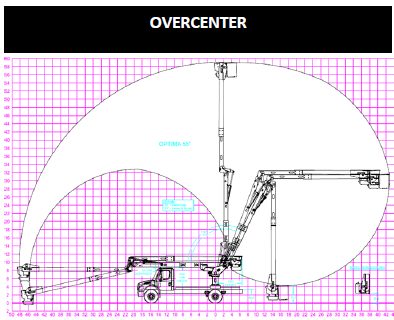 With an overcenter articulated aerial device, the upper boom can articulate beyond vertical center, to over 180 degrees from stowed. When working in the field, lineworkers can stretch out overcenter and maneuver under power lines then move the upper boom up on the field side of the lines. Overcenter aerial devices are good for open areas. Operators can move the boom instead of having to move the truck. An example of an overcenter would be a Optima HR55.
Terex overcenter aerial devices offer optional material handling (excluding the XTPRO Series), with side-mounted jib options. These units are used by electric utility, municipal, construction, and forestry tree trimming operations.
Non-Overcenter Aerial Device
 Non-Overcenter articulated aerials have a maximum upper boom angle while the platform is raised. The upper boom does not go above the pre-determined angle less than 80 degrees. The side reach will go as far as the length of the upper boom at the maximum lower boom articulation. The lower boom’s movement is dependent on the model; however, some may articulate slightly past center. An example of a non-overcenter aerial device would be the TM100.
Just like the overcenter devices, the non-overcenter aerials have optional material handling and are used by electric utility, municipal, and construction industries for transmission and distribution work.
Telescopic Aerial Device
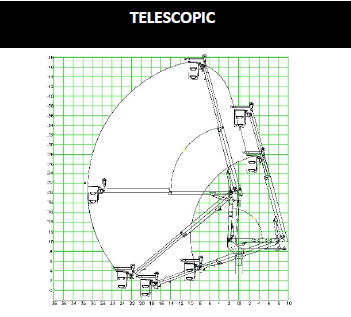 A telescopic aerial device keeps a constant angle of the upper boom while the upper boom is extended and retracted in a straight line. The articulating upper boom remains at the same angle as the lower boom is raised and lowered. The upper boom does not articulate overcenter, but the telescopic boom does extend, providing greater reach and height. An example of a Telescopic Aerial Device is the TRX52.
Telescopic aerial devices have optional material handling – either side mounted or end mounted jibs. These trucks are used by the electric utility, municipal, construction, telecommunication, sign and lighting industries.
.tmb-425x.jpg?sfvrsn=ba8a777d_1)
.tmb-425x.jpg?sfvrsn=3acc0d38_1)